


Keeping Warm with Wool
There are so many interesting facts tucked inside of census records. In the 1850 census for Middlesex County, included were 2,281 Sheep producing 5,230 pounds of wool. As we dig deeper, facts show that tobacco had fallen out of favor as a cash crop in Antebellum Virginia, and many farmers were turning to sheep as an alternative money maker for their land. Local research shows our farms combined mixed grain crops, timber, and livestock to make best use of their assets. With the average farm just over 200 acres, sheep herding required 1 to 3 acres of pasture per sheep.
As we reached the 1850s and moved through the decade, the sheep herding industry expanded and grew as a dependable income stream. Being fed by a boom in the national textile markets, breeders were investing in sheep with high annual yields per animal. Marino and Saxony stock were breeds of choice and were highly prized for their fine wool.
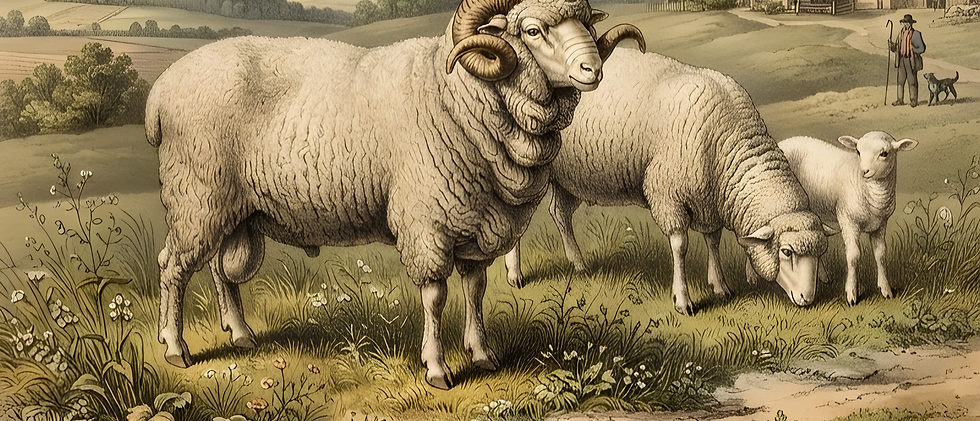
In the daily logistics of herding sheep in Middlesex County, a mix of family laborers, sheepdogs and enslaved African Americans would have been prevalent.
At the end of one year's growth of a sheep's wool, it was sheared off the sheep. Usually in the spring, in the month of May, after having grown around 2 inches long.
They would shear the wool then wash it to remove lanolin and dirt. It was then carded and combed to make it fluffy. By twisting, stretching and pulling the wool fibers using the spinning wheel, the wool fibers became one long piece of yarn. One pound of wool produced 700 to 1000 yards of worsted yarn. It required 7000 yards of yarn to weave the fabric for one skirt.
So, depending on the size of the yield, our farmers may have kept the wool for use by our local spinners and weavers to clothe their families and neighbors. Or they could have sold the raw material off to two of the regional textile mills: Manchester Cotton and Wool Manufacturing Co outside of Richmond, or perhaps Charlottesville Woolen Mills in Albermarle County. There they would have turned it into finished cloth to sell within a larger regional market.
Our spinning wheel on the floor of the museum is known as a walking wheel, a spindle wheel, or a wool wheel. It does not have a foot pedal. It was designed for short fibers such as wool or cotton, not flax. It was used by a home spinner and weaver. We also have carding boards and other implements used with the raw wool during the spinning process.
Today, we have very few sheep in Middlesex. But now that fall has arrived, and we pull out our wool sweaters and draw them close around us, it is easy to imagine the sound of sheep bleating drifting on the river breezes from those days so long ago.


Comments